The PMP exam is changing significantly in 2026, and understanding the new exam domains is now essential for anyone preparing for certification. Starting July 9, 2026, PMI introduces an updated PMP exam structure aligned with the PMBOK Guide 8th Edition, with revised domain weights and a stronger focus on business value, AI, and strategic project delivery.
If you are searching for PMP exam domains 2026, PMP exam changes 2026, or how to build a PMP study plan, this guide explains exactly where to focus your preparation.
What Are the PMP Exam Domains in 2026?
The PMP exam is structured around PMI’s Examination Content Outline (ECO), which defines three core domains that reflect real-world project management responsibilities.
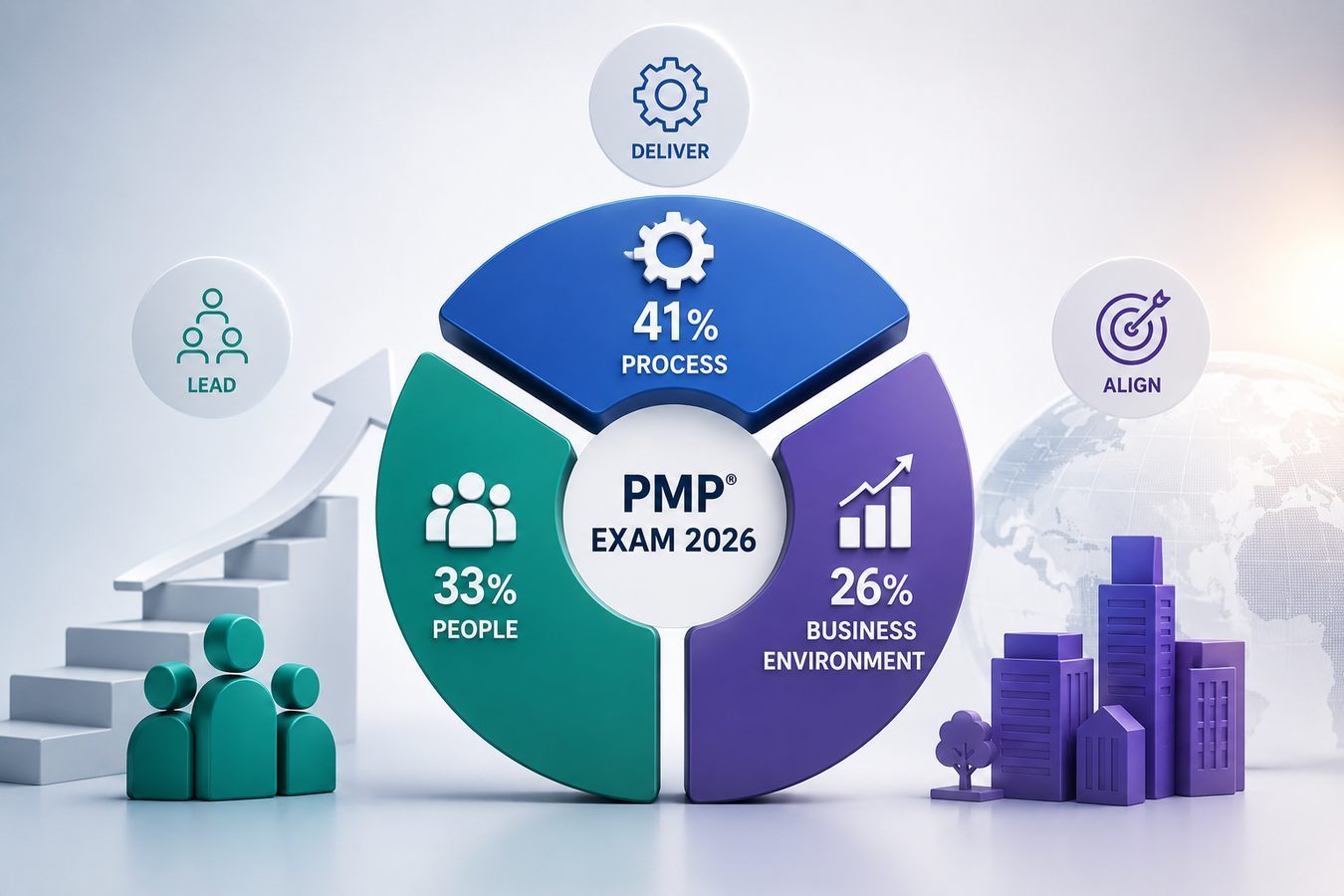
From July 9, 2026, the PMP exam domain weighting is:
- Process — 41%
- People — 33%
- Business Environment — 26%
This is a major shift compared to the previous version, especially the expansion of the Business Environment domain.
Process Domain (41%) — Delivery, Execution, and Control
The Process domain remains the largest part of the PMP exam, but it has evolved beyond traditional waterfall project management.
It now tests your ability to:
- Manage scope, schedule, cost, quality, and risk
- Select and tailor predictive, agile, or hybrid approaches
- Handle change requests and integrated change control
- Work with vendors and procurement processes
- Monitor project performance and delivery outcomes
A key shift in 2026 is the expectation that candidates can adapt delivery methods based on context. If you're struggling with exam mindset vs real-world thinking, this breakdown is helpful: PMP Certificate vs Real PM Skills: What the Exam Doesn't Teach
People Domain (33%) — Leadership and Team Management
The People domain focuses on how you lead and work with individuals and teams in complex project environments.
This includes:
- Servant leadership and team empowerment
- Conflict resolution and negotiation
- Stakeholder engagement and communication
- Emotional intelligence and team dynamics
- Managing remote and hybrid teams
Many candidates lose marks here not due to lack of knowledge, but due to applying real-world instincts instead of PMI-aligned logic. If you want to understand why this happens psychologically, read this: The Psychology Behind Why You Keep Postponing Your PMP Exam
Business Environment Domain (26%) — The Biggest Change in 2026
The Business Environment domain is now a core component of the PMP exam, increasing from 8% to 26%.
It focuses on:
- Business value delivery and benefits realization
- Strategic alignment with organizational goals
- Governance and compliance
- Organizational change management
- External business and market factors
- AI, sustainability, and modern delivery trends
This reflects a shift in how PMI defines project management in 2026: from execution-focused roles to business outcome-driven leadership roles.
How to Allocate Your PMP Study Time in 2026
For a 150-hour preparation plan:
- Process (41%) → 60–65 hours
- People (33%) → 45–50 hours
- Business Environment (26%) → 35–40 hours
However, allocation should be adjusted based on personal weaknesses identified through practice exams.
Agile and Hybrid Are Everywhere in the 2026 Exam
Approximately half of PMP exam questions now involve agile or hybrid environments.
This means you must understand iterative delivery models, adaptive planning, product-oriented thinking, hybrid governance models, and continuous value delivery. Even process-heavy questions now appear in hybrid contexts, requiring flexible thinking across all domains.
How to Study Smarter for PMP 2026
To prepare effectively:
- Start with a diagnostic exam
- Focus early on weak domains
- Use scenario-based practice questions
- Track performance by domain (not just overall score)
- Prioritize Business Environment early, not last
Key Takeaways
- PMP exam structure changes significantly in July 2026
- Business Environment becomes a major scoring domain (26%)
- Process remains largest but more adaptive and hybrid-focused
- People domain emphasizes leadership over technical management
- Success depends on domain-based preparation strategy
- Agile thinking is embedded across all domains
Final Thought
The PMP exam in 2026 is no longer about memorizing processes; it is about understanding leadership, adaptability, and business alignment.
Candidates who succeed are those who align their preparation strategy with how PMI defines modern project management today.
Take a free PMP practice test; it takes 20 minutes and shows you exactly what to focus on.